
Blog | Core Web Vitals Optimization: Guides, LCP, CLS, INP & Page Speed Optimization
Learn from these blogs to improve your websites’s core web vitals. Learn actionable strategies for reducing LCP, minimizing CLS, and optimizing interaction times to build lightning-fast web experiences.
-
Core Web Vitals Guide: 7 Powerful Tips for a 90+ Score
A practical Core Web Vitals guide covering LCP, INP, CLS, field and lab data, thresholds, diagnosis, testing, and performance problems.

-
Why Static Websites Are Fast and Secure: 7 Powerful Benefits
Discover why static websites are fast and secure, how pre-generated pages reduce server work, and how fewer parts can lower security risks.
-
Static vs Dynamic Websites: 9 Key Differences Explained
Compare static vs dynamic websites, including performance, security, scalability, hosting, SEO, and costs, to choose the right website architecture.
-
Server Migration: 9 Critical Mistakes That Slow Your Website
Learn 9 server migration mistakes that slow websites, including DNS, caching, TTFB, databases, CDNs, PHP, redirects, and server configuration.
-
Website Server Security Checklist: 40+ Things to Secure Your Server
Use this website server security checklist with 45 essential steps for updates, SSH, firewalls, HTTPS, permissions, backups, and hardening.
-
Redis vs Memcached: 7 Key Differences for Faster Caching
Compare Redis vs Memcached for website speed, object caching, scalability, persistence, memory, and workloads to choose the right caching layer.
-
Shared Hosting vs VPS vs Dedicated Server: 9 Critical Differences
Compare shared hosting vs VPS vs dedicated server for website speed, TTFB, Core Web Vitals, traffic, scalability, security, and cost.
-
HTTP/2 vs HTTP/3: 7 Powerful Differences for Website Speed
Compare HTTP/2 vs HTTP/3 to understand TCP, QUIC, multiplexing, head-of-line blocking, website speed, and potential Core Web Vitals improvements.
-
How a CDN Improves Website Speed: 7 Powerful Benefits
Learn how a CDN improves website speed by reducing latency, caching content at edge servers, lowering load, and speeding up content delivery.
-
What Is TTFB? How to Reduce Server Response Time
What Is TTFB, what causes slow server response time, how to measure it, and 7 ways to reduce TTFB for faster loading and better Core Web Vitals.
-
Browser Caching and Cache-Control: 9 Powerful Rules for Faster Websites
Learn browser caching and Cache-Control directives, how to set cache headers, choose durations, and improve speed with practical examples.
-
Web Fonts and Core Web Vitals: 7 Powerful Fixes for FOIT, FOUT and CLS
Web Fonts and Core Web Vitals explained: Learn how FOIT, FOUT, font-display, font swapping, and layout shifts affect CLS, with practical font tips.
-
How to Fix Cumulative Layout Shift: 9 Powerful CLS Fixes
Learn how to fix Cumulative Layout Shift with 9 practical fixes for images, ads, fonts, dynamic content, and CSS to improve Core Web Vitals.
-
Third-Party Scripts and Core Web Vitals: How External Code Affects Performance
Third-Party Scripts and Core Web Vitals explained: Learn how ads, analytics, widgets, and embeds affect LCP, INP, and CLS, plus 9 practical fixes.
-
How to Improve INP: 9 Powerful Fixes for JavaScript and Long Tasks
Learn how to improve INP with 9 practical fixes for JavaScript, event handlers, long tasks, and main-thread work that delays user interactions.
-
How to Eliminate Render-Blocking Resources: 9 Powerful Fixes
Learn how to eliminate render-blocking resources with 9 fixes for CSS, JavaScript, critical resources, async, defer, and faster page rendering.
-
What Is INP? 7 Powerful Facts About Interaction to Next Paint
What Is INP? Learn how Interaction to Next Paint measures responsiveness, understand the 200 ms target, and discover what causes slow interactions.
-
Image Optimization: 9 Powerful Ways to Speed Up Your Website
Image Optimization explained: Learn WebP, AVIF, responsive sizing, compression, image dimensions, and lazy loading to improve speed and LCP.
-
How TTFB Affects LCP: Why a Slow Server Delays Page Rendering
Learn how TTFB affects LCP, why slow server responses delay Largest Contentful Paint, how to diagnose high TTFB, and 7 ways to improve both.
-
Why Your LCP Image Loads Slowly: 7 Critical Fixes
LCP image loads slowly? Discover 7 fixes for late image discovery, oversized files, lazy loading, slow delivery, and rendering delays to improve LCP.
-
How to Fix Poor LCP: 9 Powerful Troubleshooting Steps
Learn how to fix poor LCP with 9 practical steps for server response, images, CSS, JavaScript, resource discovery, and rendering delays.
-
Website Speed Optimization Checklist: 55 Powerful Fixes
Use this website speed optimization checklist with 55 practical fixes for Core Web Vitals, images, JavaScript, CSS, caching, fonts, and speed.
-
Lighthouse vs CrUX: 7 Critical Differences Explained
Lighthouse vs CrUX explained: compare lab and real-world data, understand why scores differ, and learn when to use each for website performance.
-
What Is CLS? Cumulative Layout Shift Explained
What is CLS? Learn the 0.10 target, why pages shift unexpectedly, how to diagnose layout instability, and practical ways to fix it.
-
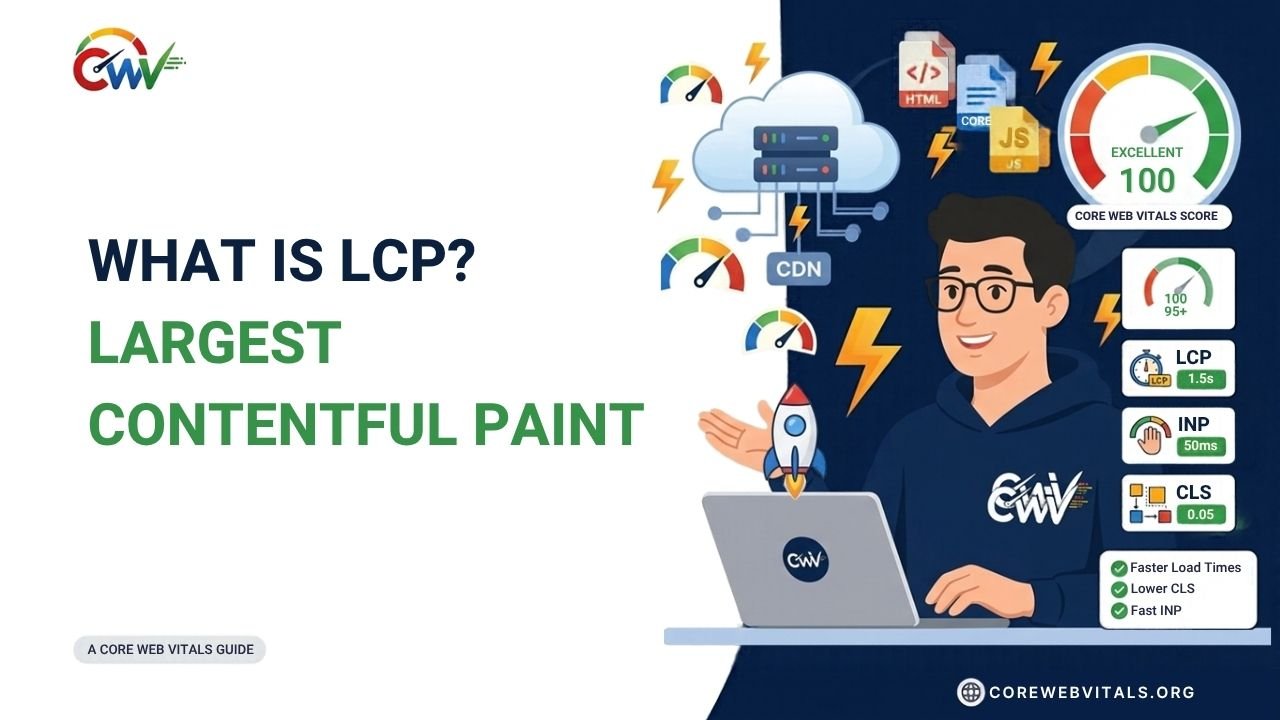
What Is LCP? Largest Contentful Paint Explained
What is LCP? Learn what Largest Contentful Paint measures, the 2.5-second target, common causes of slow LCP, and how to fix it.
Frequently Asked Questions
Everything you need to know about Core Web Vitals and performance optimization.
What are Core Web Vitals?
Core Web Vitals are a set of specific factors that Google considers important in a webpage’s overall user experience. They are made up of three specific page speed and user interaction measurements: LCP, FID (now INP), and CLS.
How often does Google update these metrics?
Google typically reviews and updates its performance metrics annually, though major changes like the transition from FID to INP are announced well in advance to give developers time to prepare.
Can I optimize for Core Web Vitals without a developer?
While some basic optimizations like image compression can be done via CMS plugins, deep technical improvements usually require developer expertise to modify the critical rendering path and JavaScript execution.
Ready to optimize?
Stop losing users to slow load times. Let our experts analyze your platform and provide a roadmap to instantaneous performance.
Test your current website result
Your Website results are officially live! Please feel free to run a quick test on Google PageSpeed Insights tool below to check out your updated scores for all recommended parameters.